Carpet Flooring Comfort

Where to Start

Before purchasing carpet, answer the following questions:

  • How is the room going to be used?
  • Will it experience heavy or light foot traffic?
  • Will the room be the center of activity for family and entertaining?
  • Is there direct access to the room from outside, or is there distance between the carpeted area and the outdoors?
  • Will the carpet receive direct sunlight?

Your answers will help narrow your carpet options and allow you to select the color, carpet construction, and cushion that best meet your needs. If you still have questions, ask your carpet dealer for guidance.
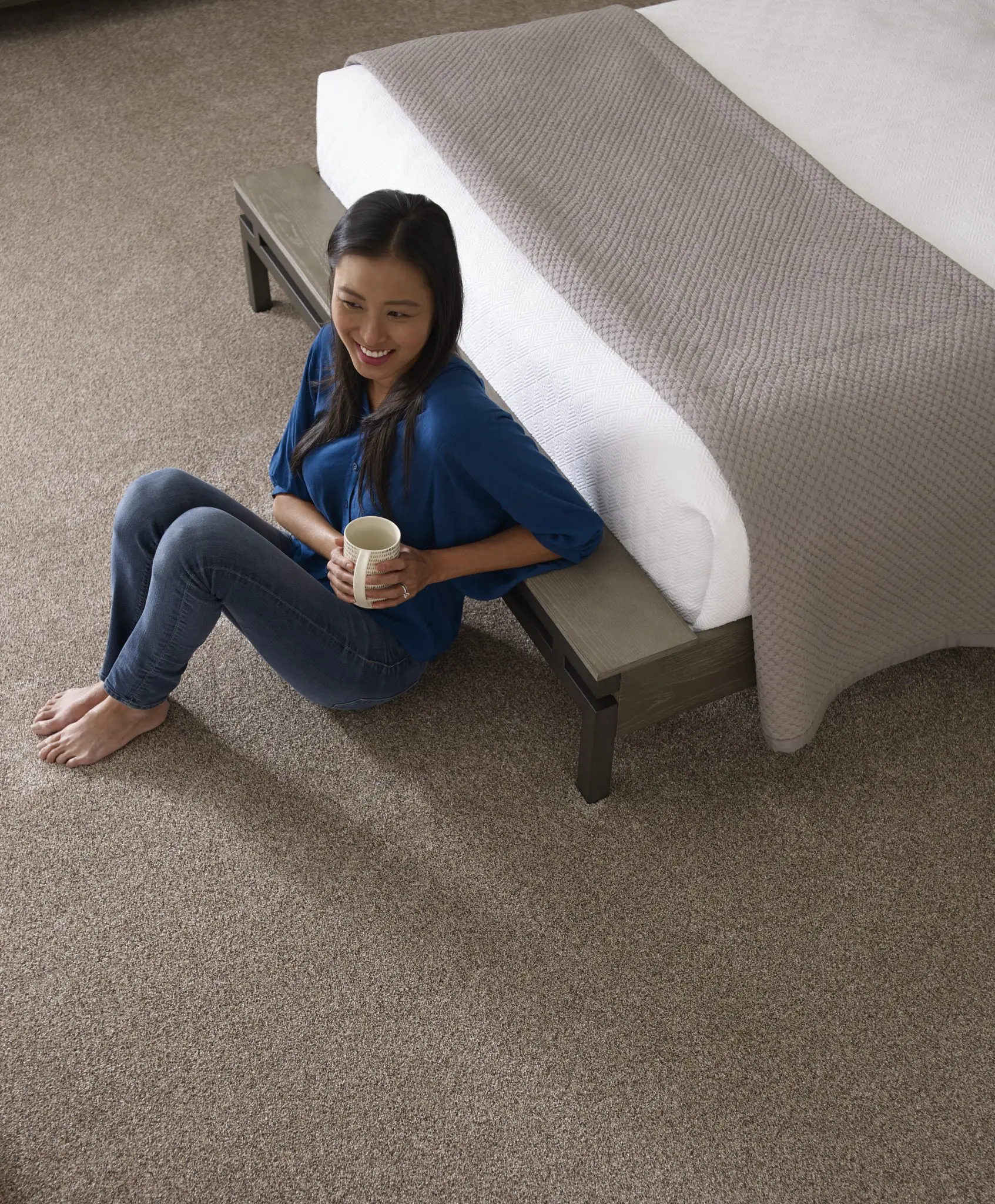
Woman sitting on carpeted floor, leaning against bed, holding cup.

Carpet Flooring Comfort

New carpet is one of the lowest volatile organic compound (VOC)-emitting flooring choices available. Different from hard floors, carpet acts as a passive air filter, trapping dust, pollen, and particles and, therefore, removing them from the breathing zone. Studies have shown that people with asthma and allergy problems have seen symptoms improve with carpet.

How Carpet Impacts Asthma and Allergies

Studies have shown that properly cleaned carpet is the best flooring choice for those dealing with asthma and allergies. The studies explain that effectively cleaned carpets can trap allergens and other particles, resulting in fewer particles escaping into the air.

Misperceptions of Mold and VOCs

When carpet is kept clean and dry, mold simply cannot grow on its synthetic fibers. Additionally, carpet is one of the lowest emitters of VOCs among various flooring choices and interior finishes. The Carpet and Rug Institute’s Green Label Plus program identifies carpet, adhesive, and cushion products that meet or exceed government indoor air quality regulations and represent the lowest emitting products on the market.

Carpet Provides Warmth and Comfort

Carpet provides thermal insulation and resistance, or R-value. In colder climates or seasons, carpet retains warm air longer than other flooring types. In addition to keeping your home cozy in the winter, this attribute conserves energy. Carpet also provides a comfortable place to sit, play, or work and gives a room an overall warmer feeling.

Carpet Softens Slips and Falls

Carpet provides safety protection for the whole family, including toddlers, older individuals, and pets. Carpet cushions our footsteps, reduces the likelihood of slips and falls, and minimizes injuries when falls do occur.

Carpet Reduces Noise

Big screen TVs, speakerphones, computers, and sound systems make our homes noisy places. Carpets help to absorb these sounds, making it easier to work, learn, and sleep. Adding a cushion pad beneath your carpet reduces noise even further. Carpet also works as a sound barrier between floors by helping to block sound transmission to rooms below. The carpet on the stairs dampens the sound of foot traffic too.

Types of Carpet

The carpet is not one-size-fits-all! In addition to several construction techniques you can choose from, carpets are made using a variety of fibers. Understanding the strengths and differences of each will help you make the right choice for your lifestyle, home, and budget.

“To get the best performance and most enjoyment out of your carpet, it’s essential to select a carpet fiber that fits your needs.”

Carpet Construction Options
Cut Pile

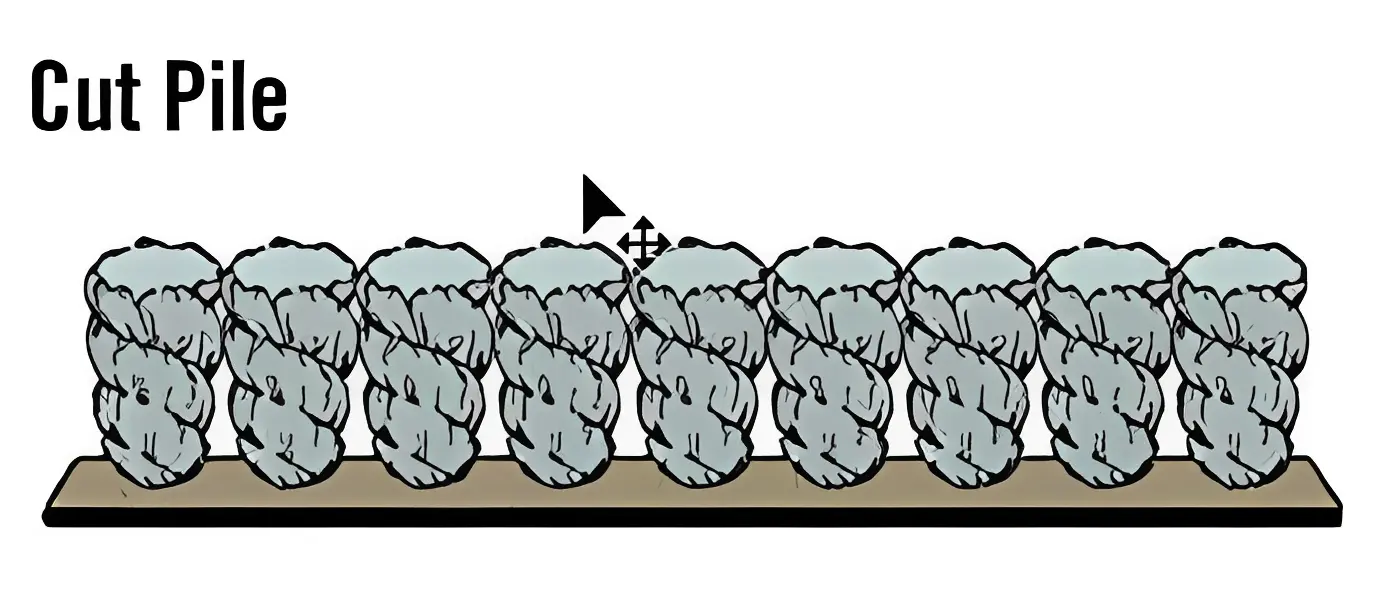
One of the most popular constructions, cut pile achieves its durability through the type of fiber used, density of tufts, and the amount of twist in the yarn. Highly twisted yarn holds its shape longer, making it a smart choice for high-traffic areas.

Textured Plush

Decorative and versatile textured surfaces help hide footprints and vacuum marks while adding casual beauty to any room. Textured plush carpet is ideal for busy, high-traffic households.

Saxony

This refined surface works well in traditional living and dining rooms.

Friezé

Casual, informal frieze forms a “curly” textured surface with its twisted yarns. The unique texture helps minimize footprints and vacuum marks.

Plush (velvet)

Best for low-traffic areas and formal rooms, plush carpet has a dense, luxurious feel but shows footprints and vacuum marks easily.

Three connected muscular arms forming loops on a platform.
Illustration of a row of gray rocks or boulders on a flat surface.
Illustrations of patterned and cut loops in textile yarns.

Loop Pile

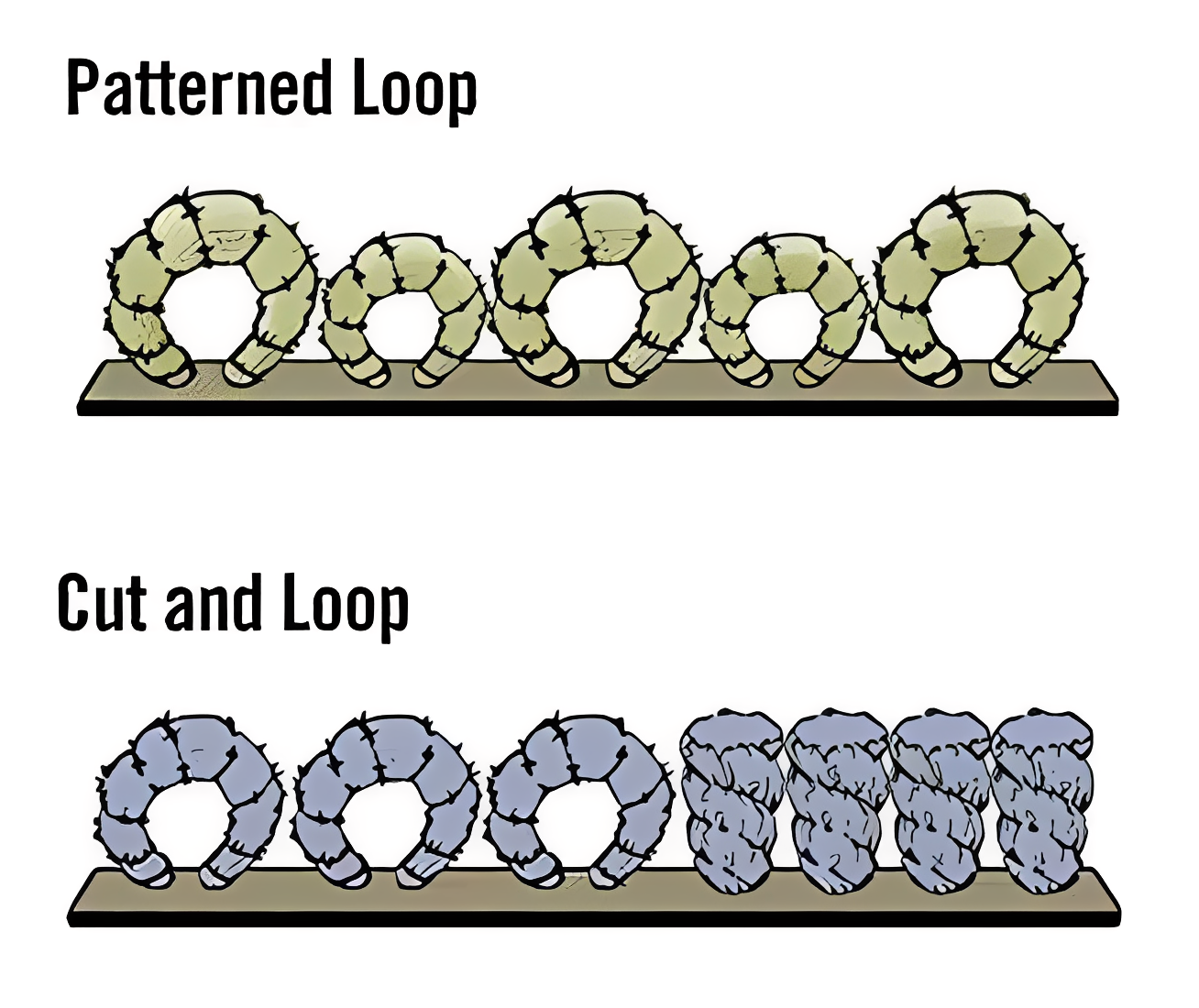
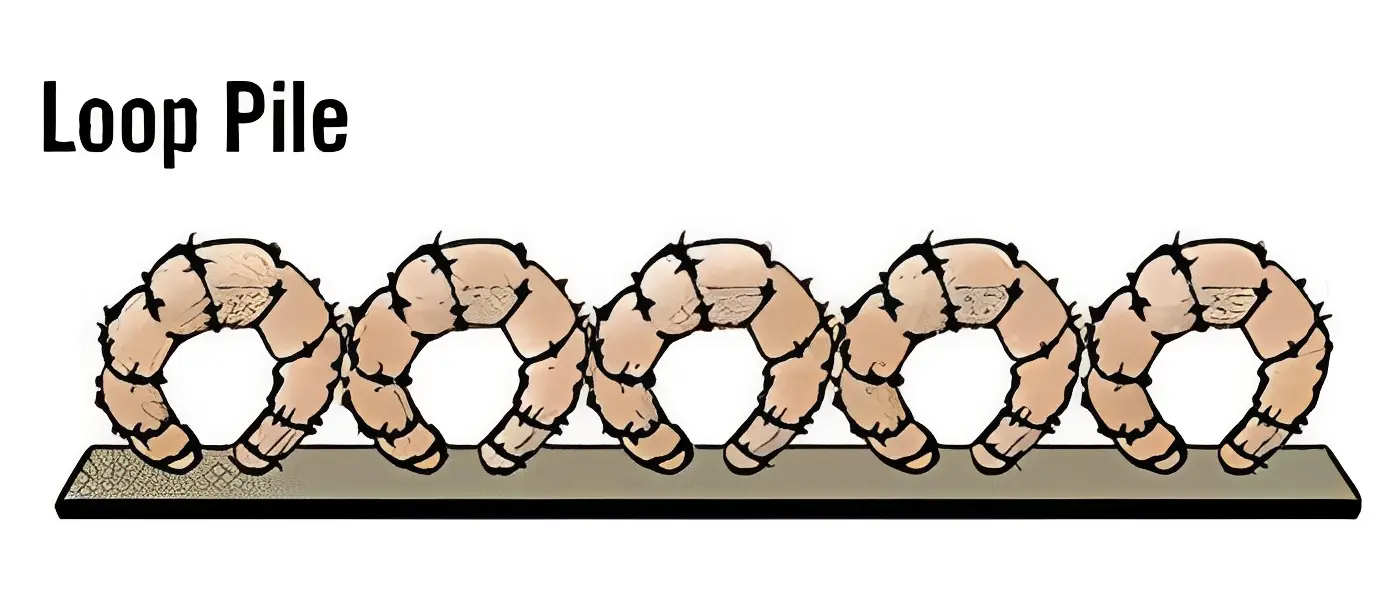
Same-height loops create a uniform look that holds up well in high-traffic areas. Many of today’s popular Berber styles are level-loop styles featuring flecks of a darker color on a lighter background.

Multi-level Loop Pile

This style usually includes two to three different loop heights to create pattern effects while providing good durability and a more casual look.

Cut-loop Pile

This carpet style combines cut and looped yarns. It provides a variety of surface textures, including sculptured effects of squares, chevrons, and swirls. The multi-color attribute is effective at hiding soil and stains.

Top Carpet Fiber Types

Nylon (Most Durable):

The most popular choice, known for exceptional durability, resilience, and strength, making it ideal for high-traffic areas. It is relatively easy to clean, though it typically requires a stain-resistant treatment.

Polyester (Stain Resistant & Soft):

Known for vibrant, fade-resistant colors and inherent stain resistance (hydrophobic). It is generally softer and more budget-friendly than nylon, though less resilient in high-traffic areas.

Triexta (Versatile & Strong):

A durable, eco-friendly option often branded as SmartStrand. It bridges the gap between nylon and polyester, offering superior stain resistance and durability without requiring a topical coating.

Olefin (Polypropylene):

Highly resistant to moisture, mold, and mildew, making it excellent for basements and indoor-outdoor use. It is solution-dyed, making it very colorfast, but it has low resilience and shows wear quickly.

Wool (Natural Luxury):

The premier natural fiber known for its comfort, high-end appearance, and excellent resilience. It is sustainable and durable but usually the most expensive, requiring specialized maintenance.